At Lonquist, our team works at the intersection of traditional energy development and emerging carbon capture and storage (CCS) applications; it's the kind of applied subsurface work we do. Consider this article to be a plain-English guide for anyone trying to understand what sequestration means when evaluating CCS feasibility.
Lonquist’s combination of subsurface engineering rigor and hands-on construction execution directly reduces NPT and the coordination overhead that typically erodes multi-well development budgets before a single lateral reaches its landing zone.
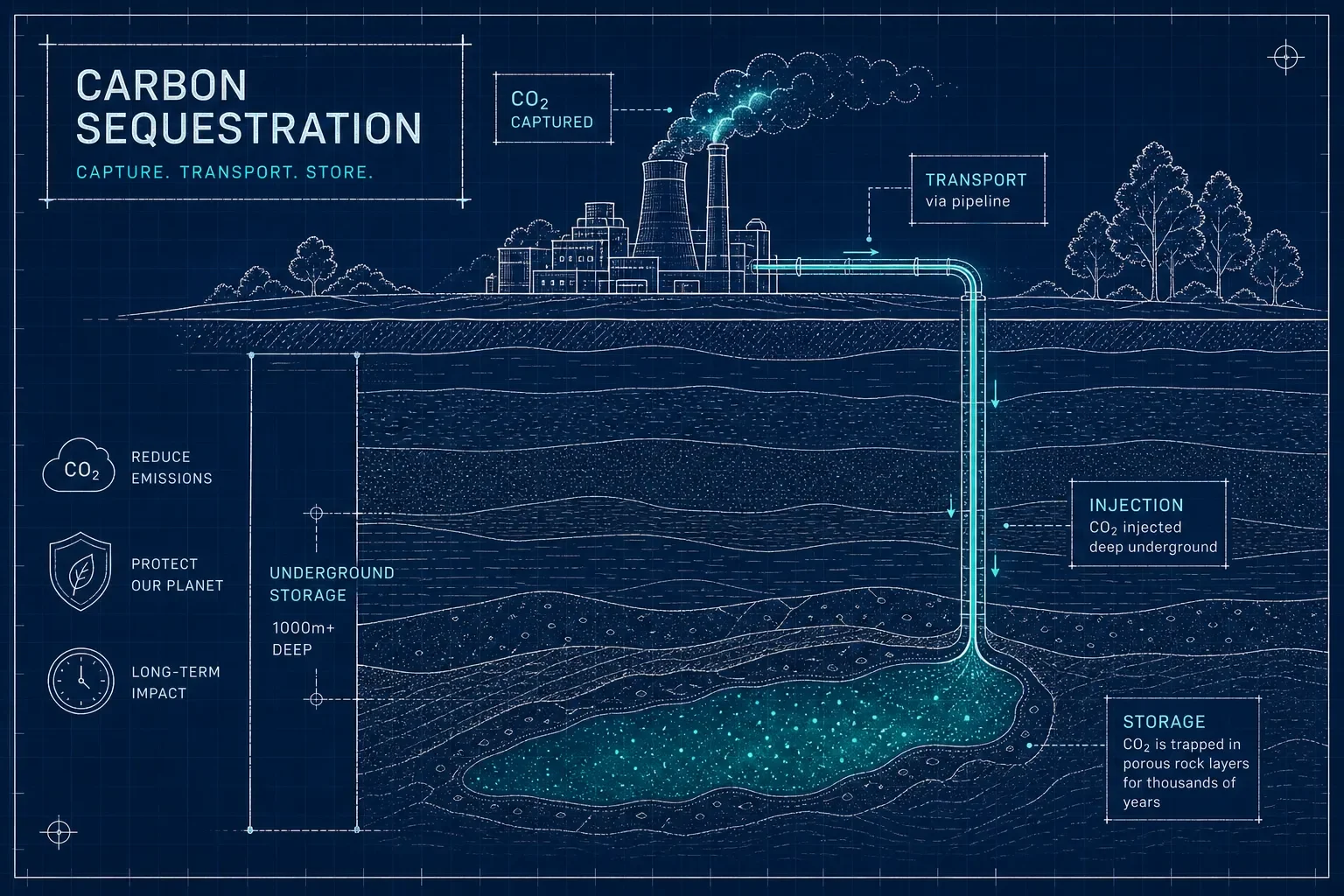
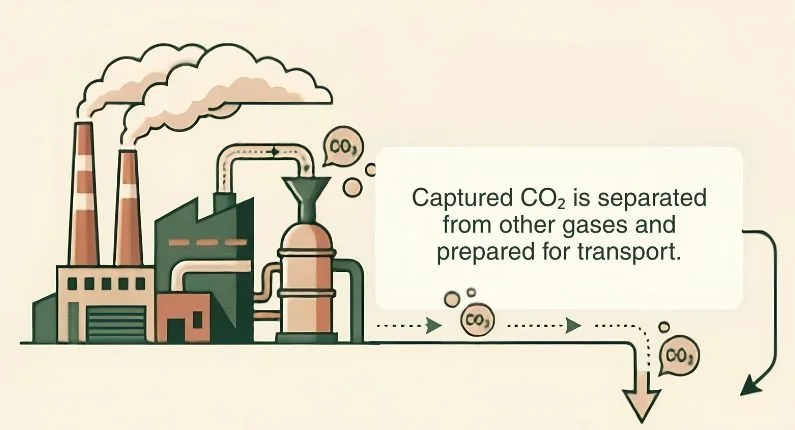
The injection process starts at the CO₂ source: a power plant, cement facility, or industrial operation where CO₂ is captured from the flue gas stream. From there, the CO₂ is compressed to its supercritical state, transported via pipeline to the injection site, and pumped down a Class VI injection well into the target formation.